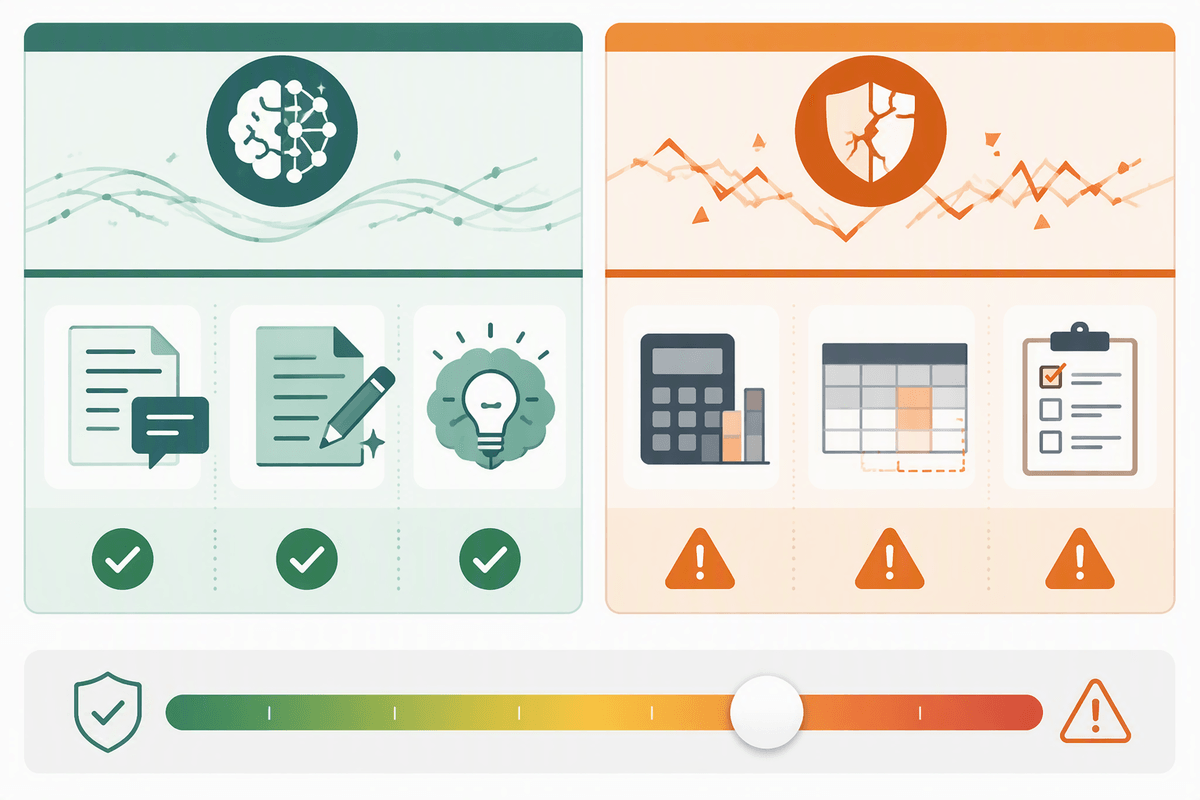
Why the demo feels convincing, until real work starts
A good demo is a narrow slice of reality: curated prompts, clean inputs, and a human in the loop who knows what “good” looks like. You can feel the lift immediately—responses read better, edge cases seem rarer, and the model recovers gracefully when you nudge it. That impression is often accurate, but incomplete.
Real work adds friction. Users paste messy text, omit context, and ask for things your team didn’t anticipate. The model gets hit with long threads, partial documents, and adversarial or joking requests that weren’t in the demo script. Suddenly “better” quality comes with new failure modes: confident wrong answers, tone drift across sessions, or higher latency and cost that makes the feature feel sluggish at scale.
The “real-world” gap: what changes outside the lab

The gap usually shows up first in the inputs. In production, you stop seeing single, well-formed prompts and start seeing pasted email chains, screenshots turned into shaky OCR, half-written tickets, and policy questions that depend on company-specific context. Retrieval helps, but it also adds moving parts: missing permissions, stale docs, and “close enough” matches that steer the model toward plausible-but-wrong details.
Then the environment changes. Latency budgets are real, so you trim context or stream partial answers, which can change tone and completeness. Cost caps push you to smaller models or fewer tool calls, and that can surface regressions that benchmarks didn’t measure. Usage patterns also shift the bar: users retry, paraphrase, and escalate when they don’t trust an answer, creating correlated failures and support load. At that point, the question stops being “is the model better?” and becomes “is the system stable under real pressure?”
Expectations to re-check: accuracy, tone, and consistency
The first expectation to reset is accuracy: a model that sounds clearer can be harder to catch when it’s wrong. In production, you’ll see more “helpful” fabrications—specific names, policies, numbers, or citations that weren’t in your sources—because the model is optimizing for a complete answer. Treat “I don’t know” as a product requirement, not a model personality trait, and decide where the system must ground claims (retrieval, tools, or explicit uncertainty) versus where a best-effort response is acceptable.
Tone and consistency are the quieter regressions. A new model might be warmer, more decisive, or more verbose, which can break brand voice, trigger compliance review, or frustrate power users who want terse output. You’ll also notice session-to-session drift: the same request answered differently after minor prompt changes, tool timeouts, or context trimming for latency. Stability often costs you: more constraints, more validation, and sometimes slower responses.
When workflows collide with model limits and tooling
The collision usually happens where your workflow expects determinism but the model is probabilistic and your tools are brittle. A customer-support flow might assume it can always pull account state, apply a refund rule, and draft a reply. In practice, tool calls time out, rate limits spike during peak hours, and retrieval returns a near match that changes the answer just enough to create rework. The model will still produce something coherent, which is exactly how the wrong action slips through review.
Context limits show up as quiet product debt. To hit latency, you trim conversation history, shorten retrieved snippets, or cap tool retries. That can break multi-step tasks like “compare these two contracts” or “summarize the last 30 tickets,” because the model loses the thread and fills gaps with confident connective tissue. The fixes are rarely free: more caching, better chunking, stricter schemas, or additional validation layers that add engineering time and can increase per-request cost.
Measurement changes the conversation: from vibes to signals
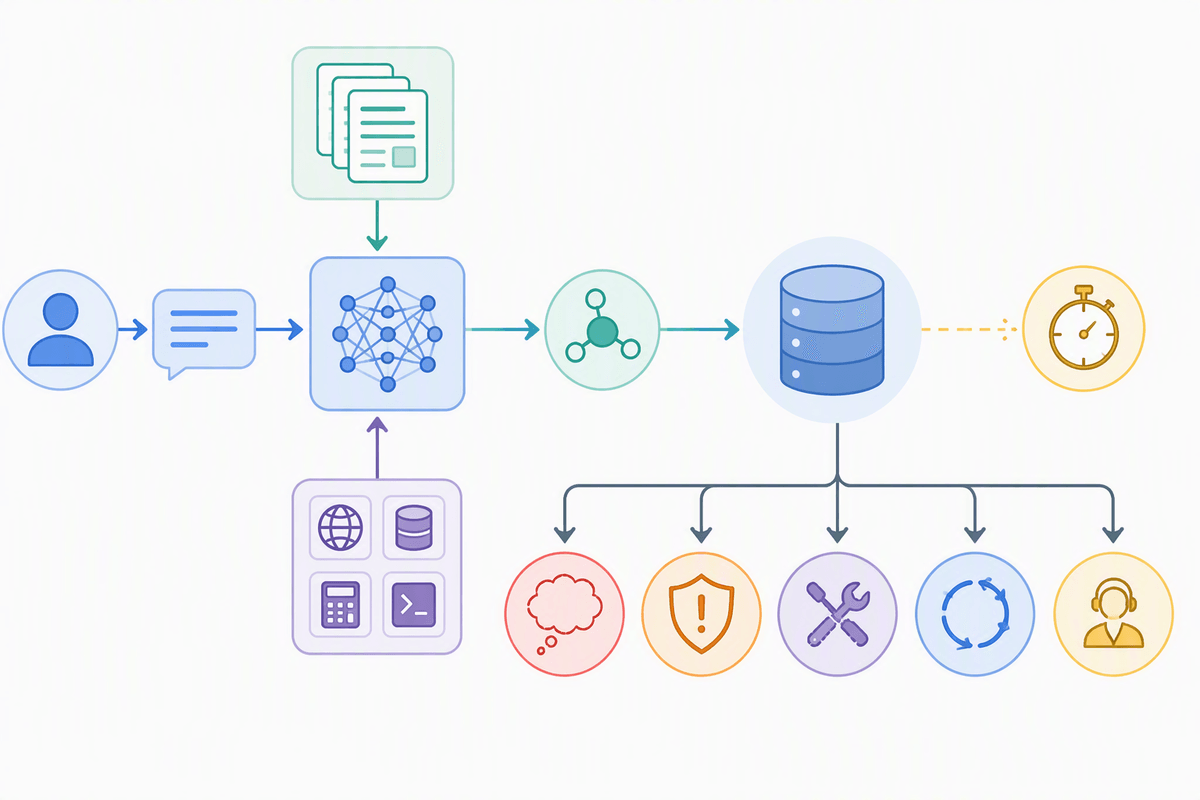
You’ll still get strong opinions in the first week: “It feels smarter,” “It’s more natural,” “It’s worse on edge cases.” The fastest way to turn that into a decision is to instrument the failures you already see. Log inputs and outputs with enough context to reproduce them (prompt, retrieved docs, tool responses, model version), then tag a small set of outcome types that matter to the business: groundedness errors, policy violations, wrong actions, re-ask loops, escalation to humans, and time-to-resolution.
Once you can count them, you can argue about priorities instead of anecdotes. A model that improves writing quality but increases “confidently wrong” by 0.5% might be unacceptable in finance, but fine in marketing copy. Add canary rollouts and holdouts so you can compare cohorts, not memories, and watch second-order metrics like retries and support tickets. The practical constraint is overhead: building reliable logging, human review queues, and golden test sets takes weeks, and you’ll need to budget for reviewer time and privacy controls.
Choosing a model after the honeymoon: trade-offs that matter
The selection question becomes less “which model is best?” and more “which failures can we afford?” Put three options side by side: the new flagship, a cheaper/smaller model, and your current baseline. Then compare them on the metrics that actually drive product pain: wrong-but-confident rate, refusal/over-caution rate, tool-call success, and how often users have to restate a request. It’s common to find the “smartest” model wins on first-turn quality but loses on consistency under context trimming, or gets more brittle when retrieval returns borderline matches.
Cost and latency aren’t footnotes; they reshape behavior. A model that’s 300–500ms slower can push users into rapid retries, which increases load and makes the system feel unreliable. If the stronger model only fits the budget when you cut context or reduce tool retries, you may be buying quality with one hand and creating errors with the other. Many teams land on a tiered setup: route low-risk requests to the cheaper model, reserve the best model for high-stakes paths, and make the fallback explicit when tools fail.
Resetting expectations without losing momentum
The first reset that keeps teams moving is admitting the rollout will change the spec. Put the model behind a feature flag, define what “good enough” means per workflow, and pre-agree on thresholds that trigger a rollback or a scope cut (for example: wrong-action rate, policy violations, median latency, or a spike in retries). Treat these as product requirements, not model surprises.
Ship one or two high-confidence paths where grounding and tooling are strong, and make uncertainty visible everywhere else: cite sources, ask a clarifying question, or route to a human. Momentum comes from a steady cadence—weekly eval updates, a short list of top failure modes, and small prompt/tool fixes—rather than waiting for a perfect model.