Why AI progress often starts with messy experiments
A familiar pattern in AI is that the first working version looks more like a workshop prototype than a polished machine: people try model sizes, training recipes, and data mixes until something “clicks.” That’s not because researchers dislike theory; it’s because the systems are too complex for clean, closed-form predictions about what will work in practice.
Real progress often comes from running many controlled trials, watching metrics move, and learning which changes reliably improve results. The constraint is cost: experiments require compute, data pipelines, and time, and the search space is huge. You can’t test everything, so teams make bets, instrument carefully, and accept that early success may arrive before anyone can fully explain why it happened.
What “useful results” look like before theory catches up
In practice, “useful” usually means the model’s behavior is stable enough to lean on for a specific job, even if the underlying reasons remain unclear. A customer-support classifier that consistently routes tickets to the right queue, or a transcription model that hits an agreed error rate across accents and noisy rooms, can create value long before anyone can describe its internal reasoning in human terms.
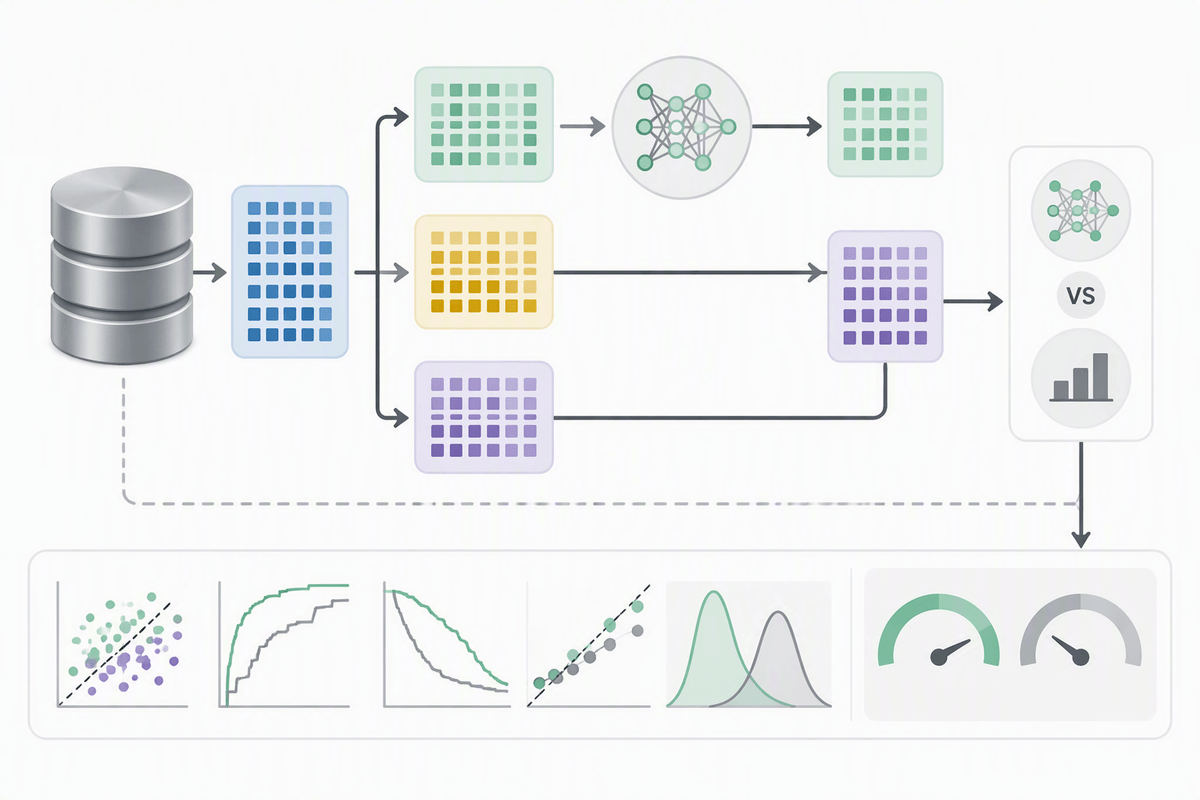
The key is that usefulness shows up as repeatable performance under defined conditions: held-out tests, pre-registered evaluation sets, and comparisons against a baseline humans already trust. It also shows up in predictable failure modes—knowing the kinds of inputs that break the system, how often that happens, and what the fallback is. The practical difficulty is that early wins can be narrow; expand the setting (new languages, new users, new incentives) and the same system may degrade in ways benchmarks didn’t reveal.
A long tradition: engineering success ahead of scientific certainty
You already see this pattern outside AI. Steam engines powered factories before thermodynamics was fully formalized; airplanes flew before anyone could perfectly model turbulence; medicines were used effectively before mechanisms were nailed down. The playbook was empirical: measure outcomes, standardize tests, and build safety margins that assume your model is incomplete.
AI fits that tradition. A team can ship a recommendation model or document triage tool because it beats the current process on agreed metrics, even if no one can explain every internal feature interaction. What changes the stakes is speed and scale: one training run can influence millions of decisions. That makes the “engineering first” approach viable only when you can define operating conditions, detect drift, and afford the ongoing cost of monitoring, retraining, and rollback when reality shifts.
Why black-box gains happen: scale, data, and feedback loops
A common experience in modern AI is watching a model get noticeably better even when no one changed the “idea,” just the scale. Larger models can represent more patterns, and bigger training runs average out noise, so performance rises through brute statistical leverage rather than a new, interpretable mechanism. Data matters just as much: broader coverage (more domains, writing styles, edge cases) reduces surprises at deployment, while cleaner labels or better filtering can move quality more than a clever architecture tweak.
Feedback loops then compound the gains. When a system ships, it creates new data: what users click, where they correct the output, which queries cause drop-offs, what gets escalated to a human. Teams fold those signals into evaluation sets, fine-tuning, and ranking logic, and the product improves even if the internal reasoning stays opaque. These loops are expensive to instrument well, and they can quietly optimize for the wrong thing—engagement over accuracy, speed over safety—unless goals and guardrails are explicit.
Where lack of understanding becomes expensive or dangerous
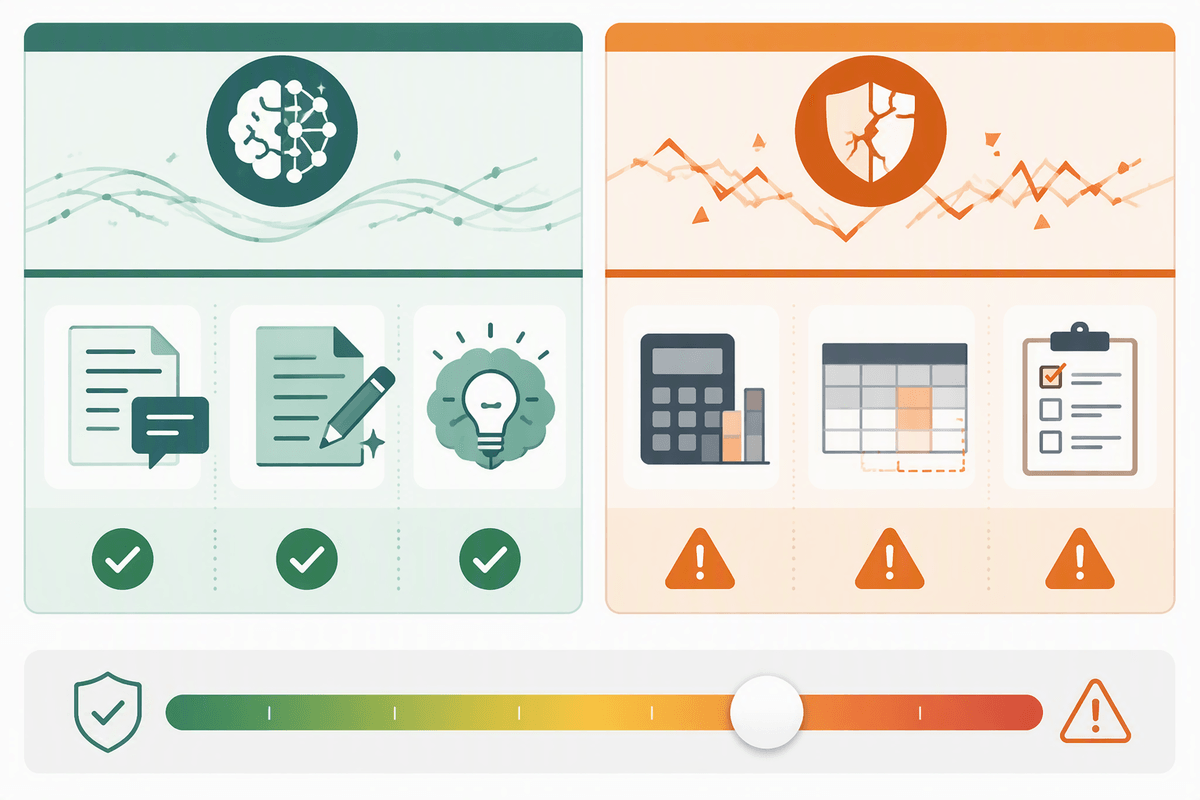
The trouble starts when you can’t bound the downside. If a model is only “mostly right,” that may be fine for drafting marketing copy, but it becomes costly in credit decisions, hiring screens, medical triage, or legal workflows where a rare error can trigger real harm and liability. In these settings, not understanding the system’s failure modes shows up as expensive escalation queues, brittle exception handling, and disputes you can’t resolve because you can’t explain why one case was treated differently from another.
Opacity is also dangerous when the environment changes. A fraud model that worked last quarter can quietly degrade as attackers adapt; a policy model can drift as regulations or user behavior shift. Without a mental model of what signals the system relies on, teams may miss spurious shortcuts (like correlating “risk” with a proxy for protected traits) until audits, complaints, or fines force a rethink. The practical constraint is that building safeguards—human review, monitoring, incident response, and documentation—adds ongoing operating cost that many “black-box wins” didn’t budget for.
Turning experiments into trustworthy tools: validation beyond benchmarks

A familiar failure with “great benchmark” models is that they look reliable in the lab and then behave oddly in the corners of real work: unusual formats, conflicting instructions, stressed users, or adversarial prompts. Making an experimental system trustworthy starts by expanding validation to resemble operations. That means checking performance by slice (region, language, device, customer segment), running targeted stress tests, and measuring not just average quality but variance and worst-case behavior. It also means testing the full pipeline: retrieval, tools, UI defaults, and human handoffs, because those interactions often create the real failure modes.
Trust also comes from evidence you can revisit when something goes wrong. Teams use model cards, data lineage, change logs, and pre-defined acceptance criteria, then run shadow deployments and canary releases to catch regressions before full rollout. The practical cost is time and staffing: building evaluation sets, red-teaming, and monitoring dashboards is ongoing work, and every retrain can reopen questions you thought were settled.
Choosing when to ship, when to study, and how to iterate
A product leader’s real decision is not “do we understand it,” but “can we bound and manage its mistakes.” Ship when the task is well-scoped, outcomes are observable, and you have fast rollback: clear acceptance tests, monitoring for drift, and a human fallback for edge cases. Study when errors are hard to detect, harms compound, or decisions need explanation for appeals, audits, or due process.
Iteration then becomes disciplined: change one thing at a time, keep a stable evaluation suite, and treat every new model as a new operational risk review. The constraint is throughput—good evals, red-teams, and incident response cost headcount and slow releases.