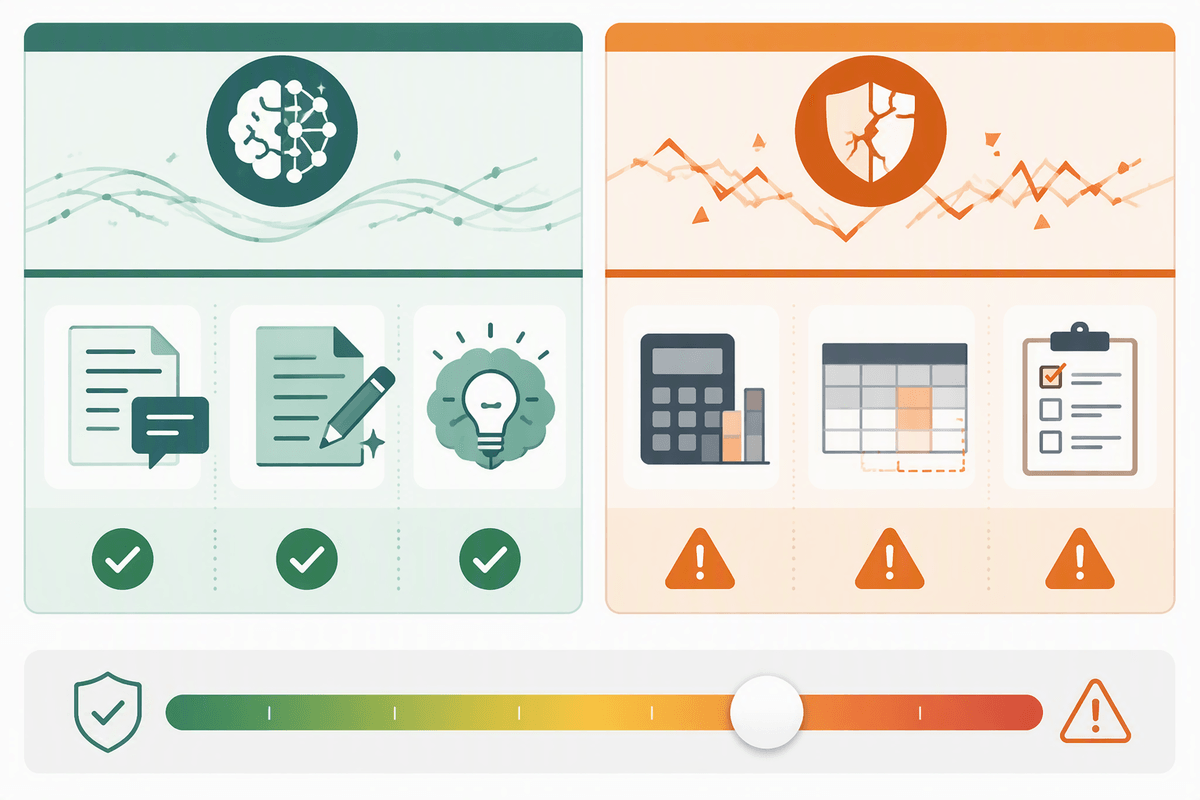
Why AI talk suddenly feels like stock-market talk
You’ve probably noticed how a normal update about a new model quickly turns into a conversation about “who’s winning,” “what’s priced in,” and “how fast it’s all going to happen.” That shift isn’t just excitement about technology. It’s the tone of speculation: confident timelines, winner-take-all framing, and pressure to act before the window closes. The result feels like a market cycle because it borrows market habits—overweighting momentum, underweighting boring constraints like data quality, integration time, compliance, and ongoing inference costs. Even careful people start talking in bets instead of checks.
The bubble incentives: who benefits from louder certainty
Think about who gains when a messy, uncertain story gets compressed into a simple one: “this will replace most jobs,” “this startup has the moat,” “AGI in two years.” Venture fundraising and public-market narratives reward clarity more than accuracy, so the loudest claims often function like marketing collateral. Founders get meetings, vendors get pilots, media gets clicks, and executives get a decisive storyline they can repeat internally. Even skeptics can benefit: “it’s all a scam” is also a clean, shareable position.
The certainty is cheaper to produce than proof. Proof means benchmarks that match real workflows, security reviews, procurement, change management, and weeks of instrumented usage data. That work is slow, and it rarely produces a headline. In bubble conditions, the incentive is to talk past the hard middle—cost per task, failure modes, and who is on call when the system breaks.
When “capabilities” claims replace real-world performance checks
A familiar pattern shows up inside companies: someone demos a model writing a clean summary or producing decent code, and the conversation jumps to “so it can do customer support” or “so it can replace analysts.” That leap treats a capability as a product. A model can generate plausible text and still fail at the parts work is made of: pulling the right data from messy systems, following edge-case policies, staying consistent across a 30-step process, and admitting when it doesn’t know. In practice, the first 80% of a task looks magical; the last 20% is where the tickets, escalations, and brand risk live.
Capabilities talk also hides the economics. A “works in a demo” workflow may be too slow, too expensive at scale, or too fragile under real input. Real-world checks ask different questions: error rates on your data, what humans still review, what it costs per resolved case, and what happens on a bad day when the model is confidently wrong.
How hype reshapes the vocabulary: disruption, moats, AGI

You can hear the bubble in the words. “Disruption” starts to mean “will happen quickly,” not “might change costs or workflows over years.” “Moat” stops being about distribution, data rights, switching costs, or regulatory approvals, and becomes a vague claim that a model is “ahead.” Even “platform” gets stretched to cover a single API endpoint, while “agents” becomes shorthand for “automation,” skipping the parts that make automation real: permissions, audit trails, exception handling, and someone owning the outcome.
AGI is the clearest example of vocabulary drift. It’s used like a deadline (“before competitors get it”), a valuation anchor (“priced like it’s inevitable”), or a catch-all for “the model felt smart in a demo.” Once a term implies inevitability, it becomes harder to ask basic questions without sounding naive or slow. A useful move is to translate hype terms into operational ones: which job step changes, what accuracy is required, what it costs per task, and what breaks when inputs are adversarial or weird.
The missing middle: ordinary use cases that don’t sound exciting
In most organizations, the useful wins are smaller and quieter than the headlines. It’s the weekly status update that turns into a cleaner one-page brief, the support agent who gets a first-draft reply with the right policy snippets attached, the analyst who generates five plausible spreadsheet formulas and checks the best one, or the recruiter who standardizes interview notes so they’re searchable. None of that sounds like “replacement.” It sounds like reduced cycle time, fewer context switches, and better handoffs.
The missing middle is where the work is: choosing a narrow task, defining “good enough,” and wiring the tool into the systems people actually use. It also has real costs—prompt and evaluation work, access controls, logging, training, and ongoing monitoring when inputs drift. If you can’t name the owner, the review step, and the dollar-per-task target, you don’t have a use case yet. You have a story.
A practical checklist for reading AI news during bubbles
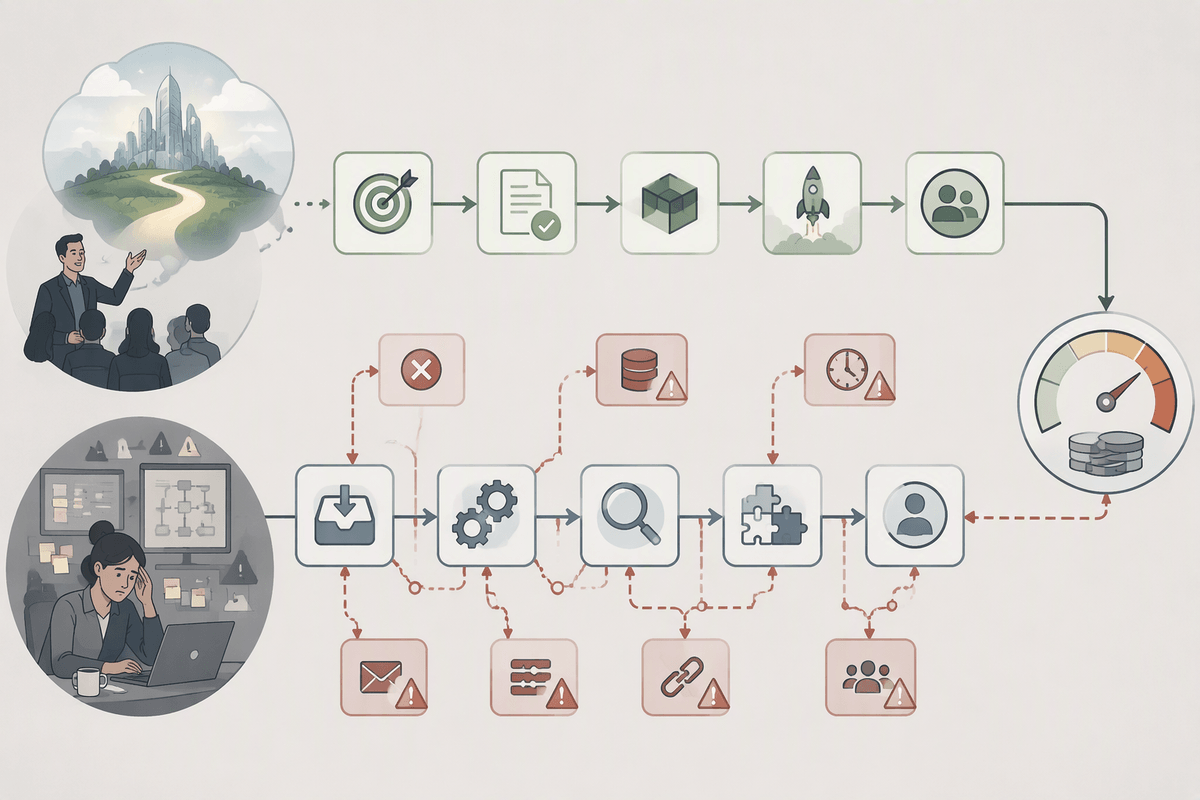
When you read an AI headline, treat it like an earnings call: useful, but optimized to persuade. Start by pinning down what was actually shown—an internal demo, a benchmark, a customer case study, or a controlled pilot—and what “works” means (accuracy, latency, escalation rate, and how often a human had to intervene). If the claim is “agentic,” look for the unglamorous plumbing: permissions, audit logs, rollback, and who owns failures at 2 a.m. If none of that is mentioned, assume the story is about potential, not reliability.
Then run the economics check. Ask “cost per completed task,” not “model price,” and include integration time, security review, and ongoing evaluation. Notice when timelines are stated without dependencies (data access, procurement, policy constraints) or when competitive framing replaces specifics. If you can’t describe the workflow, the failure mode, and the unit cost in one minute, you’re reading narrative—interesting, but not yet operational.
What stays after the bubble: clearer questions, better habits
The part worth keeping is the discipline bubbles accidentally teach: separating “impressive” from “dependable.” Teams that get value tend to keep a small set of steady questions: what job step is changing, what inputs it touches, what the human review looks like, and what the acceptable error rate is. They also keep receipts—before/after metrics, a simple eval set, and a weekly check on drift—because anecdotes get louder when money is chasing a story.
The harder habit is social, not technical: making it normal to say “we don’t know yet” without losing status. That means asking for timelines with dependencies, not vibes, and being willing to fund the unsexy work—data cleanup, permissions, logging, and on-call ownership—before declaring “transformation.”